Português



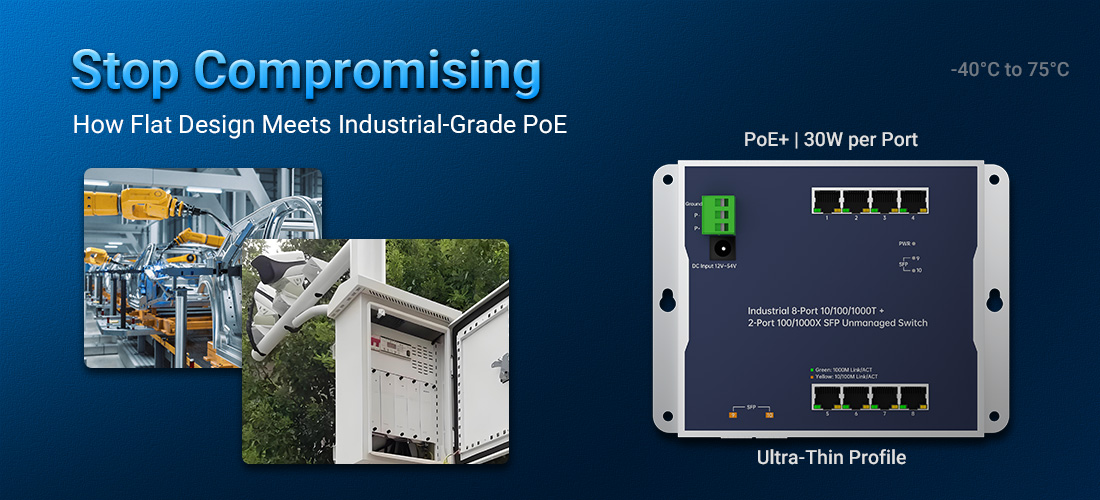
Para engenheiros de rede e projetistas de sistemas industriais, implantar equipamentos em ambientes hostis e com espaço limitado sempre significou uma escolha difícil: sacrificar o desempenho em prol de um formato compacto ou comprometer o espaço para obter os recursos robustos necessários. Essa era de concessões acabou. Surgiu o switch PoE plano industrial Representa uma mudança fundamental, combinando uma filosofia de design ultrafino e plano com o desempenho intransigente de Power over Ethernet (PoE) de nível industrial. Essa convergência não é apenas uma tendência estética, mas uma resposta de engenharia calculada às demandas em constante evolução da Internet Industrial das Coisas (IIoT), cidades inteligentes e redes de borda.
A principal vantagem de um design plano, em um contexto de engenharia, é a sua simplicidade conceitual e máxima flexibilidade de implementação. Quando aplicado a switches industriais, isso se traduz em um switch Ethernet industrial compacto que oferece versatilidade de implantação incomparável. Esses dispositivos são projetados para se encaixarem perfeitamente em painéis de controle rasos, em trilhos DIN junto a outros equipamentos ou em gabinetes de parede com baixa altura livre, onde switches volumosos tradicionais não caberiam. Essa eficiência espacial é crucial em aplicações como transporte público, automação industrial e sistemas de gerenciamento predial, onde o espaço é um recurso valioso. O formato plano elimina a necessidade de soluções de montagem hierárquicas complexas, permitindo que todo o dispositivo seja tratado como uma única unidade, facilmente integrada.
No entanto, um perfil fino não significa nada sem robustez e confiabilidade. Verdade. switches PoE industriais planos São construídos segundo especificações de nível industrial, garantindo desempenho máximo onde mais importa. Normalmente, apresentam uma carcaça de metal reforçado para maior durabilidade e blindagem EMI, operam em uma ampla faixa de temperatura, de -40 °C a 75 °C, e possuem altos índices de proteção contra entrada de água e poeira, como IP31 ou IP40. Além disso, são projetados para atender a rigorosos padrões industriais de EMC, como o EN50121-4 para aplicações ferroviárias, garantindo operação estável em ambientes com ruído elétrico, como fábricas ou subestações de energia. Essa construção robusta garante que o design compacto não comprometa a resistência.
O verdadeiro potencial deste paradigma de design é revelado quando combinado com recursos avançados de switches industriais PoE de alta potência. Os switches planos modernos são equipados com portas PoE que atendem aos padrões IEEE 802.3af/at, fornecendo até 30 W por porta para dispositivos como câmeras IP, pontos de acesso sem fio e sensores. Os modelos líderes vão além, suportando o padrão IEEE 802.3bt (PoE++) para fornecer até 90 W por porta, com orçamentos de energia totais que chegam a 480 W. Isso permite que um único switch compacto alimente e conecte equipamentos de alta demanda, como câmeras PTZ (pan-tilt-zoom), sistemas avançados de iluminação LED e até mesmo dispositivos de computação de borda, simplificando drasticamente a fiação e reduzindo os custos de instalação.
Para arquitetos de rede, essa fusão oferece flexibilidade estratégica. Muitos desses switches PoE industriais não gerenciáveis proporcionam simplicidade plug-and-play para aplicações descomplicadas, garantindo fornecimento confiável de dados e energia com baixa latência, sem sobrecarga de configuração. Simultaneamente, switches PoE gerenciáveis estão disponíveis para redes complexas, oferecendo recursos avançados de Camada 2/3, como ERPS para redundância de rede abaixo de 50 ms, VLANs, QoS e gerenciamento sofisticado de energia PoE. Isso permite que os projetistas selecionem um switch que atenda precisamente às necessidades de autonomia ou controle de sua aplicação.
Em conclusão, o moderno switch PoE industrial plano desmantela com sucesso a dicotomia tradicional entre espaço e desempenho. Ao integrar uma arquitetura plana flexível e específica com componentes industriais robustos e PoE de alta capacidade, ele fornece uma base preparada para o futuro em redes de borda densas e com alto consumo de energia. Para os engenheiros que projetam a infraestrutura das fábricas inteligentes, edifícios sustentáveis e cidades conectadas do futuro, esses dispositivos não são mais um meio-termo, mas sim a solução definitiva para redes confiáveis e de alto desempenho em qualquer espaço.
 Envia-nos um email
 Ligue para nós
 Endereço
5F, Block5, GuangmingGu Industrial Park, Matian Villiage, Guangming Disitrict, Shenzhen, China



 Rede IPv6 suportada